
Meta Smart Glasses Guide: Design and Features
Meta Smart Glasses Guide: Design and Features
lso be fitted with prescription lenses, making them more practical for everyday wear.
This design philosophy is important because wearable technology needs to be comfortable enough for extended use. Instead of asking consumers to wear a separate headset, Meta integrates technology into something many people already wear.
The result is a device that can look relatively normal while quietly providing access to cameras, audio and AI.
Camera Features
The camera is one of the most recognizable features of Meta Smart Glasses.
Ray-Ban Meta uses an ultra-wide 12MP camera for photography and video. The camera allows users to capture content from their own perspective without reaching for a smartphone.
This can be useful for:
- Travel photography
- First-person videos
- Social-media content
- Family moments
- Outdoor activities
- Events and experiences
The newer Ray-Ban Meta Gen 2 improves video capture with 3K Ultra HD recording and ultrawide HDR, while also offering substantially longer battery life than the previous generation.
The first-person format is particularly useful for creators. Instead of stopping an activity to position a phone or camera, users can capture what they are naturally seeing.
Audio and Communication
Meta Smart Glasses are also designed to function as open-ear audio devices.
Built-in speakers allow users to listen to music, podcasts and audiobooks while still hearing sounds from their surroundings. Meta's newer glasses use improved speaker systems and microphones designed to provide clearer audio and reduce the impact of wind noise.
The glasses can also support hands-free phone calls and messaging.
This means one device can combine several functions normally handled by separate products. Instead of putting on headphones for music and reaching for a phone to answer a call, users can perform both activities through their glasses.
Meta has also added voice-based messaging features, including the ability to record and send voice messages through supported messaging services.
Meta AI Capabilities
Artificial intelligence is what makes modern Meta Smart Glasses significantly more capable than earlier smart eyewear.
Users can activate Meta AI using voice commands and ask questions while continuing to look at their surroundings.
Understanding What You See
One of the most useful AI capabilities is visual understanding.
Meta AI can use information captured through the glasses' camera to answer questions about the user's surroundings. Meta introduced AI with Vision so users could ask about objects, signs and other things they are looking at.
For example, users can potentially ask the glasses to identify an object, explain something written on a sign or provide information about a location.
This creates a more natural interaction with AI because users do not always have to describe the visual information themselves.
Remembering Things
Meta has also introduced memory-related functions.
The glasses can help users remember information such as where they parked or set reminders using voice commands.
These relatively simple features demonstrate an important idea: AI glasses can become useful for small everyday tasks rather than being limited to entertainment.
Translation
Translation is another major AI application.
Meta has introduced real-time translation capabilities that allow users to hear translated speech through the glasses. The company has also expanded language support, including Hindi and other languages for users in different markets.
For travelers, this can be especially useful because they do not need to constantly look down at a smartphone while communicating.
Display-Equipped Meta Glasses
Not all Meta Smart Glasses have displays.
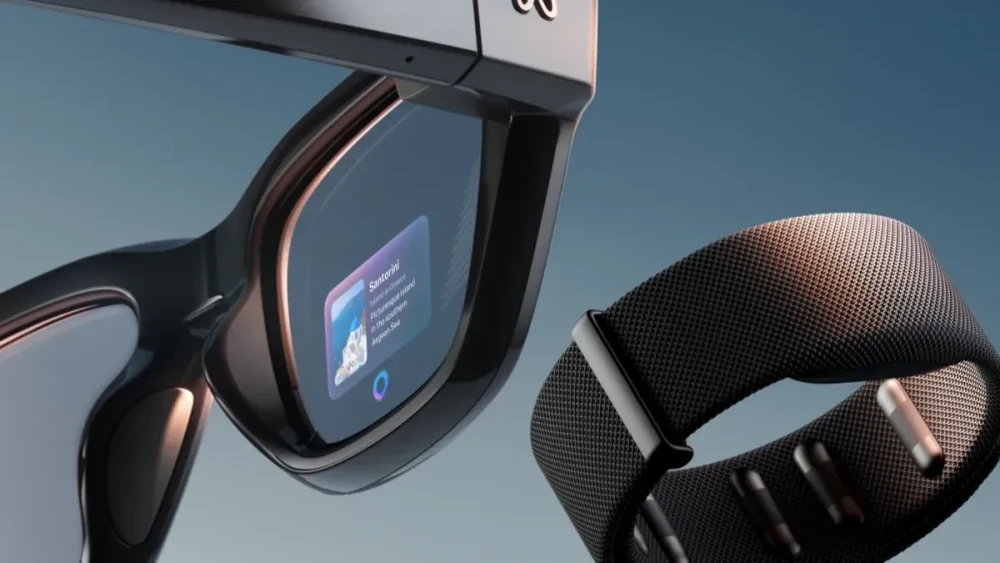
Traditional Ray-Ban Meta glasses primarily communicate through audio and voice. Meta Ray-Ban Display represents a different category, adding a full-color, high-resolution display to the eyewear.
The display can provide information such as:
- Messages
- Photo previews
- AI responses
- Translations
- Live captions
- Navigation information
- Music controls
The display is positioned toward the side of the lens and is intended for short interactions rather than remaining constantly visible. Meta describes this as a way to access useful information without turning the glasses into a smartphone placed in front of the user's face.
This could become an important step toward mainstream wearable computing.
Meta Neural Band
Meta Ray-Ban Display also introduces the Meta Neural Band, an EMG wristband designed to interpret electrical signals associated with muscle activity.
The system can translate subtle hand movements into commands for the glasses. Users can therefore interact with certain functions without touching the glasses or taking out their phone.
This is significant because voice is not always convenient. A person may be in a quiet meeting, on public transport or somewhere they do not want to speak aloud.
Neural and gesture-based controls could provide another way to interact discreetly with wearable technology.
Video Calling and Sharing Your View
Meta Smart Glasses can also change the way people communicate visually.
Supported Ray-Ban Meta glasses allow users to share their point of view during video calls through services such as WhatsApp and Messenger.
Imagine showing someone what you are looking at without holding a smartphone. You could ask a friend for advice while shopping, show a family member a travel destination or demonstrate something you are working on.
This creates a more immersive form of communication because the other person can see the experience from your perspective.
Navigation and Hands-Free Assistance
Display-equipped Meta glasses can provide walking directions through the in-lens display. Meta has described pedestrian navigation as a feature that can show turn-by-turn information without requiring users to hold a smartphone.
Meta has also said pedestrian navigation is coming to displayless glasses, where directions can instead be delivered through audio.
This could make navigation more convenient for pedestrians, tourists and commuters.
Accessibility Benefits
AI glasses could have an especially important role in accessibility.
The combination of a camera, AI and audio can provide hands-free assistance to people who are blind or have low vision. Potential uses include understanding surroundings, reading information, identifying objects and interacting with AI. Meta has highlighted these applications as part of its accessibility efforts.
Because users can receive information through audio, they do not necessarily need to interact with a conventional screen.
This demonstrates that smart glasses can be more than lifestyle products. They could become valuable assistive technology.
Battery Life
Battery performance is essential because smart glasses need to remain lightweight while powering cameras, speakers, microphones and AI-related functions.
Ray-Ban Meta Gen 2 offers up to eight hours of battery life, according to Meta, while its charging case can provide additional power.
Meta's newer Meta Glasses are also designed for more than eight hours of battery life, with a portable charging case providing additional power.
Longer battery life makes these products more practical as everyday eyewear rather than devices that users only wear occasionally.
Privacy Features
Cameras built into everyday glasses naturally create privacy concerns.
Meta uses a visible capture LED to indicate when content is being recorded. The company says that covering or disabling the capture LED automatically disables the camera.
These safeguards are important because people around the wearer need to have some indication that recording is taking place.
Users also have a responsibility to respect privacy laws, personal boundaries and the expectations of people around them.
Meta Smart Glasses in India
Meta's AI glasses have also expanded their capabilities for Indian users.
Ray-Ban Meta glasses became available in India with Meta AI integration, and Meta has subsequently introduced features including Hindi language support and localized AI experiences.
Ray-Ban Meta Gen 2 also launched in India with improved video capture, longer battery life and upgraded AI features.
This localization is important because the usefulness of AI glasses depends heavily on language support and region-specific services.
What Is the Future of Meta Smart Glasses?
Meta appears to be developing three broad categories of glasses: camera AI glasses, display AI glasses and eventually augmented-reality glasses. Meta Ray-Ban Display represents the middle category, while the company's Orion prototype provides a glimpse of its longer-term AR ambitions.
The ultimate goal could be a device that understands the user's environment, provides useful information at the right moment and minimizes the need to interact with a smartphone.
AI will likely become more contextual, cameras will become more capable and displays may become more discreet. At the same time, battery efficiency, privacy and comfort will remain critical challenges.
Conclusion
Meta Smart Glasses combine familiar eyewear with increasingly sophisticated technology. Cameras enable hands-free photography and visual AI, open-ear speakers provide music and communication, microphones enable voice interaction, and Meta AI provides assistance based on questions and, increasingly, the user's surroundings.
Display-equipped models take the concept further by adding visual information, navigation, live captions and messaging, while the Meta Neural Band introduces an alternative method of control.
The technology is still developing, but the direction is clear. Meta is trying to make computing less dependent on screens held in the hand and more naturally integrated into everyday life. If AI, battery technology, privacy protections and wearable displays continue to improve, smart glasses could become one of the most important categories in the next generation of personal technology.
Updates
Prayer Requests
Click the Pray button to let the fundraiser owner know you are praying for them.
Meta Smart Glasses Guide: Design and Features
Fundraiser created bybackily blogs
Recent Donations
Meta Smart Glasses Guide: Design and Features
Fundraiser created bybackily blogs
Meta Smart Glasses Guide: Design and Features
lso be fitted with prescription lenses, making them more practical for everyday wear.
This design philosophy is important because wearable technology needs to be comfortable enough for extended use. Instead of asking consumers to wear a separate headset, Meta integrates technology into something many people already wear.
The result is a device that can look relatively normal while quietly providing access to cameras, audio and AI.
Camera Features
The camera is one of the most recognizable features of Meta Smart Glasses.
Ray-Ban Meta uses an ultra-wide 12MP camera for photography and video. The camera allows users to capture content from their own perspective without reaching for a smartphone.
This can be useful for:
- Travel photography
- First-person videos
- Social-media content
- Family moments
- Outdoor activities
- Events and experiences
The newer Ray-Ban Meta Gen 2 improves video capture with 3K Ultra HD recording and ultrawide HDR, while also offering substantially longer battery life than the previous generation.
The first-person format is particularly useful for creators. Instead of stopping an activity to position a phone or camera, users can capture what they are naturally seeing.
Audio and Communication
Meta Smart Glasses are also designed to function as open-ear audio devices.
Built-in speakers allow users to listen to music, podcasts and audiobooks while still hearing sounds from their surroundings. Meta's newer glasses use improved speaker systems and microphones designed to provide clearer audio and reduce the impact of wind noise.
The glasses can also support hands-free phone calls and messaging.
This means one device can combine several functions normally handled by separate products. Instead of putting on headphones for music and reaching for a phone to answer a call, users can perform both activities through their glasses.
Meta has also added voice-based messaging features, including the ability to record and send voice messages through supported messaging services.
Meta AI Capabilities
Artificial intelligence is what makes modern Meta Smart Glasses significantly more capable than earlier smart eyewear.
Users can activate Meta AI using voice commands and ask questions while continuing to look at their surroundings.
Understanding What You See
One of the most useful AI capabilities is visual understanding.
Meta AI can use information captured through the glasses' camera to answer questions about the user's surroundings. Meta introduced AI with Vision so users could ask about objects, signs and other things they are looking at.
For example, users can potentially ask the glasses to identify an object, explain something written on a sign or provide information about a location.
This creates a more natural interaction with AI because users do not always have to describe the visual information themselves.
Remembering Things
Meta has also introduced memory-related functions.
The glasses can help users remember information such as where they parked or set reminders using voice commands.
These relatively simple features demonstrate an important idea: AI glasses can become useful for small everyday tasks rather than being limited to entertainment.
Translation
Translation is another major AI application.
Meta has introduced real-time translation capabilities that allow users to hear translated speech through the glasses. The company has also expanded language support, including Hindi and other languages for users in different markets.
For travelers, this can be especially useful because they do not need to constantly look down at a smartphone while communicating.
Display-Equipped Meta Glasses
Not all Meta Smart Glasses have displays.
Traditional Ray-Ban Meta glasses primarily communicate through audio and voice. Meta Ray-Ban Display represents a different category, adding a full-color, high-resolution display to the eyewear.
The display can provide information such as:
- Messages
- Photo previews
- AI responses
- Translations
- Live captions
- Navigation information
- Music controls
The display is positioned toward the side of the lens and is intended for short interactions rather than remaining constantly visible. Meta describes this as a way to access useful information without turning the glasses into a smartphone placed in front of the user's face.
This could become an important step toward mainstream wearable computing.
Meta Neural Band
Meta Ray-Ban Display also introduces the Meta Neural Band, an EMG wristband designed to interpret electrical signals associated with muscle activity.
The system can translate subtle hand movements into commands for the glasses. Users can therefore interact with certain functions without touching the glasses or taking out their phone.
This is significant because voice is not always convenient. A person may be in a quiet meeting, on public transport or somewhere they do not want to speak aloud.
Neural and gesture-based controls could provide another way to interact discreetly with wearable technology.
Video Calling and Sharing Your View
Meta Smart Glasses can also change the way people communicate visually.
Supported Ray-Ban Meta glasses allow users to share their point of view during video calls through services such as WhatsApp and Messenger.
Imagine showing someone what you are looking at without holding a smartphone. You could ask a friend for advice while shopping, show a family member a travel destination or demonstrate something you are working on.
This creates a more immersive form of communication because the other person can see the experience from your perspective.
Navigation and Hands-Free Assistance
Display-equipped Meta glasses can provide walking directions through the in-lens display. Meta has described pedestrian navigation as a feature that can show turn-by-turn information without requiring users to hold a smartphone.
Meta has also said pedestrian navigation is coming to displayless glasses, where directions can instead be delivered through audio.
This could make navigation more convenient for pedestrians, tourists and commuters.
Accessibility Benefits
AI glasses could have an especially important role in accessibility.
The combination of a camera, AI and audio can provide hands-free assistance to people who are blind or have low vision. Potential uses include understanding surroundings, reading information, identifying objects and interacting with AI. Meta has highlighted these applications as part of its accessibility efforts.
Because users can receive information through audio, they do not necessarily need to interact with a conventional screen.
This demonstrates that smart glasses can be more than lifestyle products. They could become valuable assistive technology.
Battery Life
Battery performance is essential because smart glasses need to remain lightweight while powering cameras, speakers, microphones and AI-related functions.
Ray-Ban Meta Gen 2 offers up to eight hours of battery life, according to Meta, while its charging case can provide additional power.
Meta's newer Meta Glasses are also designed for more than eight hours of battery life, with a portable charging case providing additional power.
Longer battery life makes these products more practical as everyday eyewear rather than devices that users only wear occasionally.
Privacy Features
Cameras built into everyday glasses naturally create privacy concerns.
Meta uses a visible capture LED to indicate when content is being recorded. The company says that covering or disabling the capture LED automatically disables the camera.
These safeguards are important because people around the wearer need to have some indication that recording is taking place.
Users also have a responsibility to respect privacy laws, personal boundaries and the expectations of people around them.
Meta Smart Glasses in India
Meta's AI glasses have also expanded their capabilities for Indian users.
Ray-Ban Meta glasses became available in India with Meta AI integration, and Meta has subsequently introduced features including Hindi language support and localized AI experiences.
Ray-Ban Meta Gen 2 also launched in India with improved video capture, longer battery life and upgraded AI features.
This localization is important because the usefulness of AI glasses depends heavily on language support and region-specific services.
What Is the Future of Meta Smart Glasses?
Meta appears to be developing three broad categories of glasses: camera AI glasses, display AI glasses and eventually augmented-reality glasses. Meta Ray-Ban Display represents the middle category, while the company's Orion prototype provides a glimpse of its longer-term AR ambitions.
The ultimate goal could be a device that understands the user's environment, provides useful information at the right moment and minimizes the need to interact with a smartphone.
AI will likely become more contextual, cameras will become more capable and displays may become more discreet. At the same time, battery efficiency, privacy and comfort will remain critical challenges.
Conclusion
Meta Smart Glasses combine familiar eyewear with increasingly sophisticated technology. Cameras enable hands-free photography and visual AI, open-ear speakers provide music and communication, microphones enable voice interaction, and Meta AI provides assistance based on questions and, increasingly, the user's surroundings.
Display-equipped models take the concept further by adding visual information, navigation, live captions and messaging, while the Meta Neural Band introduces an alternative method of control.
The technology is still developing, but the direction is clear. Meta is trying to make computing less dependent on screens held in the hand and more naturally integrated into everyday life. If AI, battery technology, privacy protections and wearable displays continue to improve, smart glasses could become one of the most important categories in the next generation of personal technology.
Recent Donations
Updates
Prayer Requests
Click the Pray button to let the fundraiser owner know you are praying for them.
Fundraisers Near Me

GiverArmy Cause CURRENT EMERGENCIES
Our Current Emergencies cause is a fund uniquely set up to provide grants to qualifying campaigns on GiveSendGo.com.Grants Distribution is for:Pr...
Loading...

GiverArmy Cause ANIMAL RESCUE & CARE
Our Animal Rescue & Care cause is a fund uniquely set up to provide grants to qualifying campaigns on GiveSendGo.com.Grants Distribution:Prom...
Loading...

GiverArmy Cause ARTS & EDUCATION
Our Arts & Education cause is a fund uniquely set up to provide grants to qualifying campaigns on GiveSendGo.com.Grants Distribution:Supporting ar...
Loading...

GiverArmy Cause FAITH BASED
Our Faith-Based cause is a fund uniquely set up to provide grants to qualifying campaigns on GiveSendGo.com.Grants Distribution:Funding mission-o...
Loading...

GiverArmy Cause RESCUE & REHABILITATION
Our Rescue & Rehabilitation Cause is a fund uniquely set up to provide grants to qualifying campaigns on GiveSendGo.com.Grants Distribution:S...
Loading...

GiverArmy Cause EARTH CARE
Our Earth Care cause is a fund uniquely set up to provide grants to qualifying campaigns on GiveSendGo.com.Grants Distribution are for:Funding communi...
Loading...

GiverArmy Cause ESSENTIALS FOR LIFE
Our Essentials for Life Cause is a fund set up to provide grants to qualifying campaigns on GiveSendGo.com. Grants Distribution are designated to...
Loading...

GiverArmy Cause CRISIS RESPONSE
Our Crisis Response Cause is a fund uniquely set up to mobilize resources for need, creating direct Kingdom Impact, providing grants to qualifying cam...
Loading...

GiverArmy Cause JUSTICE FOR ALL
Our Justice for All Cause is uniquely set up fund that provide grants to qualifying campaigns on GiveSendGo.com.Grants Distributions are made to:Ensur...
Loading...

GiverArmy Cause MEDICAL RELIEF
Our Medical Relief Cause is our charitable fund set up to provide grants to qualifying campaigns on GiveSendGo.com.Grants Distribution from this...
Loading...
GiveSendGo
The place where help and hope go hand-in-hand.
