

Blog
Noah’s Ark in Turkey: Inside the 2026 Search at Durupinar
Posted by Alex Shipley. Interview by Elijah Snider. on Aug 21, 2026
For thousands of years, Noah's Ark has been one of the most searched-for biblical artifacts in history, and it may have been sitting in plain sight this whole time.
There's a ship-shaped ridge in the mountains of eastern Turkey, and for more than sixty years it's been photographed from the air, walked across on foot, and never once looked at from the inside. In 2026, that finally changes.
We sat down over a video call with Andrew Jones, the founder and lead researcher at Noah's Ark Scans, to talk through the site, the details of his team’s 2026 search, the fundraiser behind it, and what he hopes they'll find. Watch the full video here.
The 2026 search is led by Noah's Ark Scans and funded by everyday people who want the question answered. To help fund "The Search for Noah's Ark," click here. GiveSendGo is a partner in this fundraiser.
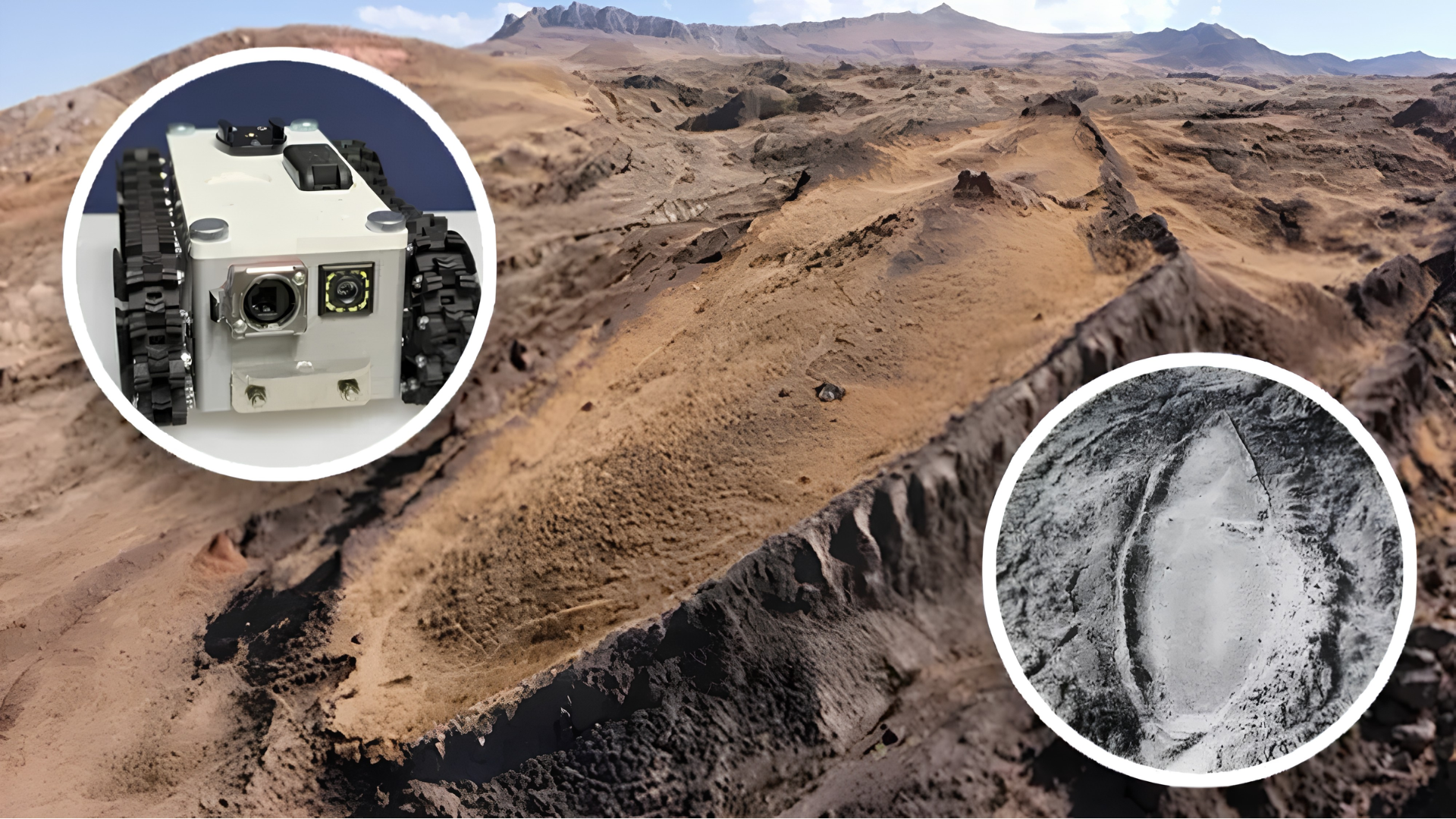
The Durupinar formation is a large, boat-shaped mound about 18 miles south of Mount Ararat, near Turkey's border with Iran. It was first noted in 1959 and named for Captain Ilhan Durupinar, the Turkish army officer who flagged it during an aerial mapping survey after earthquakes and heavy rains exposed its outline.
Two things have kept people debating it ever since. The first is its shape, which reads unmistakably like the hull of a ship pressed into the hillside. The second is its size. Researchers put its length at roughly 515 feet, which they note lines up strikingly with the dimensions Genesis gives for the ark — 300 cubits long (Genesis 6:15). For what the Bible actually says about where the ark came to rest, and why "the mountains of Ararat" means more than one peak, see our companion piece on [Mount Ararat and Noah's Ark].
For decades, most geologists who examined the site concluded it was a natural formation, and mainstream archaeology has not endorsed it as the ark. That's still the majority view. What's changed is that the tools now exist to test the question directly.
The 2026 investigation is run by Noah's Ark Scans alongside a team of Turkish and international researchers, after their Turkish partner secured permits from multiple government agencies for what the group calls the most thorough scientific study ever attempted at the site. The fieldwork is directed by Professor Cenker Atila of the archaeology department at Sivas Cumhuriyet University, working with collaborators from Turkish universities.
Jones has driven the effort for years, and he's candid about his background: he's a software developer by trade, not an archaeologist. He describes archaeology as the "serious side hobby" his parents once told him to keep, since it wouldn't pay the bills, a passion he's spent decades pursuing at this one site. That's part of why the 2026 work is built around credentialed academic partners and laboratory analysis rather than any one person's conclusions.
What keeps pulling him back is simple: "It's the mystery of what's below the surface." As he points out, for all the attention the site has drawn, "no one has excavated the site. No one has put in a systematic core drilling system to pull out samples and see what's really below the surface." No one, that is, until now.
Getting permission to work at a protected site in Turkey is its own story, and Jones tells it as a series of unlikely connections. Non-Americans can't excavate in Turkey on their own; the law requires partnering with a Turkish archaeologist and a university. The connection that made 2026 possible, Jones says, came through a chance meeting with a Turkish archaeology student and social-media creator while he was in Cairo, who introduced him to Professor Atila. From there, the project went before a Turkish government commission and was approved unanimously.
Jones doesn't see that chain of events as luck. He sees God's hand in it: "God opened the doors and we ran through it." What followed was official permits, a credentialed academic lead, government oversight, and more institutional backing than most previous efforts at the site ever had.
Rather than digging the site up, the team is running a multi-phase survey designed to map what's underneath while leaving the formation largely intact. The phases the researchers have described:
The idea is to answer the question with converging evidence rather than one dramatic dig, in a way Turkish authorities will permit at a protected site.
Nothing yet is certain, but there's enough to explain why the search keeps going. The researchers report that earlier scans revealed corridor-like and angular features beneath the surface, and that soil samples from inside the boat-shaped area showed higher organic content than the surrounding ground, which they read as consistent with decomposing organic material. Jones, who is also the project's lead researcher, said, "Everything is pointing to this being a man-made object that's ship-shaped in the mountains of Ararat and three hundred cubits long."
The team's newest survey adds to that case. In an August 2026 press release, Noah's Ark Scans reported that a specialized deep-ground radar had scanned the formation without finding the solid bedrock a purely natural feature would be expected to have — a result the team says is hard to reconcile with the "it's just rock" explanation. They're careful to note it isn't proof on its own.
Skeptics read the same data differently, and no scientific consensus has formed around the site. No wood or clearly man-made object has been recovered and verified. That tension is exactly why the core drilling matters: it moves the question from interpreting scans toward physical material a laboratory can test. We lay out both sides in [The Case For and Against the Durupinar Formation].
Mainstream institutions generally won't touch Ark research, as the reputational risk is too high, and no university wants its name on a search skeptics call a hunt for a fairy tale. That leaves the public. "It's a lot easier to appeal to the general public and say, hey, this is a project we're doing," Jones has said. "If you're interested in our project, help us." The season's work — radar, drilling, lab analysis — runs to over a million dollars, funded by everyday people who want to see the question answered.
Whatever the drilling turns up, it's a rare thing to watch in real time: a decades-old question finally put to a direct test, with real scientists, real permits, and results the team has committed to publishing either way. As Jones puts it, "You're not gonna find a site like this anywhere in the world, where you're looking at the actual object associated with this event in the book of Genesis." It might confirm what believers have hoped for generations. It might not. Both outcomes are worth knowing honestly, and worth following as they unfold.
Follow "The Search for Noah's Ark" and help fund the dig here. GiveSendGo is a partner in this fundraiser.
Keep Reading
There's a ship-shaped ridge in the mountains of eastern Turkey, and for more than sixty years it's been photographed from the air, walked across on foot, and never once looked at from the inside. In 2026, that finally changes.
We sat down over a video call with Andrew Jones, the founder and lead researcher at Noah's Ark Scans, to talk through the site, the details of his team’s 2026 search, the fundraiser behind it, and what he hopes they'll find. Watch the full video here.
The 2026 search is led by Noah's Ark Scans and funded by everyday people who want the question answered. To help fund "The Search for Noah's Ark," click here. GiveSendGo is a partner in this fundraiser.
What Is the Durupinar Formation?
The Durupinar formation is a large, boat-shaped mound about 18 miles south of Mount Ararat, near Turkey's border with Iran. It was first noted in 1959 and named for Captain Ilhan Durupinar, the Turkish army officer who flagged it during an aerial mapping survey after earthquakes and heavy rains exposed its outline.
Two things have kept people debating it ever since. The first is its shape, which reads unmistakably like the hull of a ship pressed into the hillside. The second is its size. Researchers put its length at roughly 515 feet, which they note lines up strikingly with the dimensions Genesis gives for the ark — 300 cubits long (Genesis 6:15). For what the Bible actually says about where the ark came to rest, and why "the mountains of Ararat" means more than one peak, see our companion piece on [Mount Ararat and Noah's Ark].
For decades, most geologists who examined the site concluded it was a natural formation, and mainstream archaeology has not endorsed it as the ark. That's still the majority view. What's changed is that the tools now exist to test the question directly.
Who Is Leading the 2026 Search?
The 2026 investigation is run by Noah's Ark Scans alongside a team of Turkish and international researchers, after their Turkish partner secured permits from multiple government agencies for what the group calls the most thorough scientific study ever attempted at the site. The fieldwork is directed by Professor Cenker Atila of the archaeology department at Sivas Cumhuriyet University, working with collaborators from Turkish universities.
Jones has driven the effort for years, and he's candid about his background: he's a software developer by trade, not an archaeologist. He describes archaeology as the "serious side hobby" his parents once told him to keep, since it wouldn't pay the bills, a passion he's spent decades pursuing at this one site. That's part of why the 2026 work is built around credentialed academic partners and laboratory analysis rather than any one person's conclusions.
What keeps pulling him back is simple: "It's the mystery of what's below the surface." As he points out, for all the attention the site has drawn, "no one has excavated the site. No one has put in a systematic core drilling system to pull out samples and see what's really below the surface." No one, that is, until now.
How the Search Got Its Permits
Getting permission to work at a protected site in Turkey is its own story, and Jones tells it as a series of unlikely connections. Non-Americans can't excavate in Turkey on their own; the law requires partnering with a Turkish archaeologist and a university. The connection that made 2026 possible, Jones says, came through a chance meeting with a Turkish archaeology student and social-media creator while he was in Cairo, who introduced him to Professor Atila. From there, the project went before a Turkish government commission and was approved unanimously.
Jones doesn't see that chain of events as luck. He sees God's hand in it: "God opened the doors and we ran through it." What followed was official permits, a credentialed academic lead, government oversight, and more institutional backing than most previous efforts at the site ever had.
What Are They Actually Doing?
Rather than digging the site up, the team is running a multi-phase survey designed to map what's underneath while leaving the formation largely intact. The phases the researchers have described:
- Aerial baseline mapping — a precise surface model of the whole formation from the air.
- Deep subsurface scanning — ground-penetrating radar and related imaging to look for structure below ground.
- Sonic core drilling — pulling narrow physical samples from deep inside the formation, the first time material from that depth would be examined directly.
- Deep electrical geophysics — electrical resistivity tomography, which reads how underground materials conduct current, to distinguish rock from possible voids or worked material.
- Void exploration — investigating any cavities the scans turn up, potentially with a small underground drone the team nicknamed "Gopher."
- Data fusion and laboratory analysis — combining every dataset and sending physical samples to university labs for independent testing.
The idea is to answer the question with converging evidence rather than one dramatic dig, in a way Turkish authorities will permit at a protected site.
What Have They Found So Far?
Nothing yet is certain, but there's enough to explain why the search keeps going. The researchers report that earlier scans revealed corridor-like and angular features beneath the surface, and that soil samples from inside the boat-shaped area showed higher organic content than the surrounding ground, which they read as consistent with decomposing organic material. Jones, who is also the project's lead researcher, said, "Everything is pointing to this being a man-made object that's ship-shaped in the mountains of Ararat and three hundred cubits long."
The team's newest survey adds to that case. In an August 2026 press release, Noah's Ark Scans reported that a specialized deep-ground radar had scanned the formation without finding the solid bedrock a purely natural feature would be expected to have — a result the team says is hard to reconcile with the "it's just rock" explanation. They're careful to note it isn't proof on its own.
Skeptics read the same data differently, and no scientific consensus has formed around the site. No wood or clearly man-made object has been recovered and verified. That tension is exactly why the core drilling matters: it moves the question from interpreting scans toward physical material a laboratory can test. We lay out both sides in [The Case For and Against the Durupinar Formation].
Why It's Funded by the Public, Not a University
Mainstream institutions generally won't touch Ark research, as the reputational risk is too high, and no university wants its name on a search skeptics call a hunt for a fairy tale. That leaves the public. "It's a lot easier to appeal to the general public and say, hey, this is a project we're doing," Jones has said. "If you're interested in our project, help us." The season's work — radar, drilling, lab analysis — runs to over a million dollars, funded by everyday people who want to see the question answered.
Why This Search Is Worth Following
Whatever the drilling turns up, it's a rare thing to watch in real time: a decades-old question finally put to a direct test, with real scientists, real permits, and results the team has committed to publishing either way. As Jones puts it, "You're not gonna find a site like this anywhere in the world, where you're looking at the actual object associated with this event in the book of Genesis." It might confirm what believers have hoped for generations. It might not. Both outcomes are worth knowing honestly, and worth following as they unfold.
Follow "The Search for Noah's Ark" and help fund the dig here. GiveSendGo is a partner in this fundraiser.
Keep Reading
- Mount Ararat and Noah's Ark: What the Bible Actually Says — where Genesis says the ark landed, and why it's more than one peak
- What Is the Durupinar Formation? — the full story of the site, its discovery, and the debate
- Has Noah's Ark Been Found? What We Know in 2026 — the honest state of the search right now
- The Case For and Against the Durupinar Formation — the strongest points on both sides, side by side
- Photos from the Noah's Ark Site: Durupinar Up Close — the images that have fueled sixty years of debate
- Core Drilling Comes to the Noah's Ark Site — the centerpiece of the 2026 season, explained
Comments
There are no comments yet. Be the first to add a comment below!
Leave a Comment
Fields with * are requiredGiveSendGo
The place where help and hope go hand-in-hand.
