

Blog
Core Drilling Begins at the Noah’s Ark Site
Posted by Alex Shipley. Interview by Elijah Snider. on Aug 22, 2026
This is the year the search for Noah's Ark stops looking and starts digging, or, more precisely, drilling. A research team in eastern Turkey is preparing to bore deep into the formation many believe holds the ark's remains, and bring up the first samples anyone has ever pulled from inside it.
The team at Noah's Ark Scans, working with Turkish academics and under official government permits, has made a sonic core-drilling program the centerpiece of its 2026 research season at the Durupinar formation, the site many believe holds the remains of Noah's Ark. It's the first effort of its kind at this level of technology in decades.
That work is funded by everyday people. To help fund "The Search for Noah's Ark," click here. GiveSendGo is a partner in this fundraiser. You can also watch GiveSendGo's full interivew with Andrew Jones, founder and lead researcher at Noah's Ark Scans, here.
Everything at Durupinar up to now has been read from a distance. Aerial photographs going back to 1959, surface surveys, soil samples from around the formation, and ground-penetrating radar have all produced images and data that still have to be interpreted. That's exactly why the site has stayed contested for so long: two people can look at the same radar return and see two different things, one a built structure, the other ordinary rock.
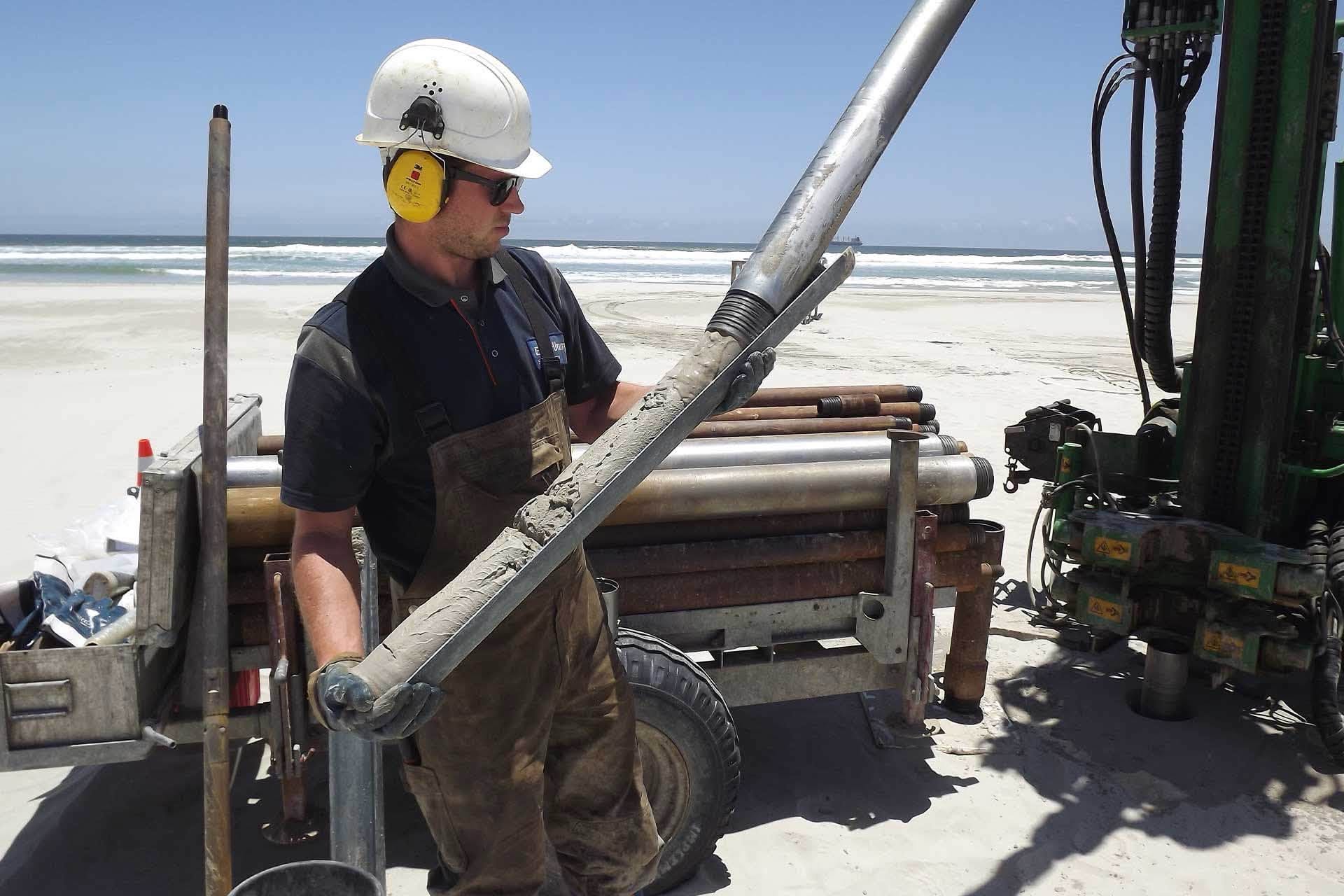
Core drilling is different. It pulls up a continuous, physical column of what's actually underneath, layer by layer, so it can be examined directly instead of inferred from a scan. It's the gap the researchers keep pointing to. "No one has gotten deep into the site," Jones said. Plenty of people have measured the surface, walked it, and scanned it, but no one has pulled material from far below it. The drilling is meant to move the question from "does it look like a boat?" to testing what the material itself actually is.
The drilling builds on data the team has already released, which is what pulled this story back into national news over the past year.
On the geophysics side, ground-penetrating radar and resistivity scans have, in the team's reading, picked up angular features and a long central corridor several meters below the surface, patterns Jones argues are hard to explain as natural rock. In an August 2026 press release, the team added that a specialized deep-ground radar had scanned the formation without finding the solid bedrock a purely natural feature would be expected to have, though they note that isn't proof on its own.
On the soil side, the team reported that samples taken inside the formation showed roughly three times the organic matter of the soil just outside it, which Jones argues points to a closed environment where organic material, possibly wood, decayed over time and altered the surrounding chemistry. Critics read the same soil differently, noting that a bowl-shaped feature collecting rainwater could also produce richer soil without any buried structure. The core samples are meant to help settle which reading holds up.
The plan is deliberately non-destructive, a condition of the Turkish permits and a priority the team has stressed repeatedly. Rather than excavating the formation, the operation layers several techniques. Drones map the site in fine detail with LiDAR and thermal imaging. Next-generation ground-penetrating radar and electrical resistivity tomography scan the full length of the roughly 515-foot formation. Then the sonic core drill recovers continuous columns of soil and rock from deep below the surface, without the invasive digging Turkish authorities have wanted to avoid.
The drilling itself is more precise than the word suggests. The drill bit is only about six inches wide, aimed at exact points across a 515-foot target, which is why the team spends so long mapping and scanning before a single core comes up. And they don't plan to stop at whatever might remain of a vessel. Jones said the goal is to drill past it, deep into the mountainside beneath, "to get below whatever's there and see the layers underneath." Reaching 50 meters or more, in some places toward 75, would let the team read the site the way a geologist reads rock: layer by layer, in order.
If the scans reveal a void or chamber, the team is ready to look inside it directly. They've built a miniaturized camera probe they nicknamed the "Gopher," small enough to lower down a borehole and steer, as Jones describes it, "with a PlayStation controller." The sequence is the point: map first, scan next, then sample, then look.
Core samples don't produce instant answers. Once they're recovered, they go to laboratories in both Turkey and the United States, where dating and material analysis take time and have to be done carefully to hold up to outside scrutiny.
Jones is candid that the day the drill goes in carries a lot of weight for him. "My prayer on the day that we drill is that we just have smooth drilling," he said. "I want to get whatever data is below the ground. I don't want it to be a waste of money and time." Whatever the cores show, the team says it will make the results public. "We're gonna publish and share no matter what the data shows," Jones said, noting that when independent scientists asked for the team's earlier scan data, "we've given it to them. We're not holding back and hiding secrets." For a question this contested, a commitment to publish either way is what separates a search for evidence from a search for a headline.
This expedition isn't backed by a university endowment or a government grant. It's being funded the way a lot of ambitious searches are now, by everyday people who want to see the question answered. The fundraiser covering the core drilling, the surveys, and the analysis that follows is live on GiveSendGo, where anyone curious about what's under that ridge can help pay for the work of going in to look.
You don't have to be certain what the drill will find to think it's worth finding out. That's the appeal of crowdfunding a search like this one: it turns a sixty-year question into something a community can act on together.
Want to follow the expedition or help fund the work? Support "The Search for Noah's Ark" here. GiveSendGo is a partner in this fundraiser.
Images courtesy of Noah’s Ark Scans’ website, fundraiser, and Facebook page.
The team at Noah's Ark Scans, working with Turkish academics and under official government permits, has made a sonic core-drilling program the centerpiece of its 2026 research season at the Durupinar formation, the site many believe holds the remains of Noah's Ark. It's the first effort of its kind at this level of technology in decades.
That work is funded by everyday people. To help fund "The Search for Noah's Ark," click here. GiveSendGo is a partner in this fundraiser. You can also watch GiveSendGo's full interivew with Andrew Jones, founder and lead researcher at Noah's Ark Scans, here.
Why Drilling Is the Turning Point
Everything at Durupinar up to now has been read from a distance. Aerial photographs going back to 1959, surface surveys, soil samples from around the formation, and ground-penetrating radar have all produced images and data that still have to be interpreted. That's exactly why the site has stayed contested for so long: two people can look at the same radar return and see two different things, one a built structure, the other ordinary rock.
Core drilling is different. It pulls up a continuous, physical column of what's actually underneath, layer by layer, so it can be examined directly instead of inferred from a scan. It's the gap the researchers keep pointing to. "No one has gotten deep into the site," Jones said. Plenty of people have measured the surface, walked it, and scanned it, but no one has pulled material from far below it. The drilling is meant to move the question from "does it look like a boat?" to testing what the material itself actually is.
What the Earlier Findings Showed
The drilling builds on data the team has already released, which is what pulled this story back into national news over the past year.
On the geophysics side, ground-penetrating radar and resistivity scans have, in the team's reading, picked up angular features and a long central corridor several meters below the surface, patterns Jones argues are hard to explain as natural rock. In an August 2026 press release, the team added that a specialized deep-ground radar had scanned the formation without finding the solid bedrock a purely natural feature would be expected to have, though they note that isn't proof on its own.
On the soil side, the team reported that samples taken inside the formation showed roughly three times the organic matter of the soil just outside it, which Jones argues points to a closed environment where organic material, possibly wood, decayed over time and altered the surrounding chemistry. Critics read the same soil differently, noting that a bowl-shaped feature collecting rainwater could also produce richer soil without any buried structure. The core samples are meant to help settle which reading holds up.
What the 2026 Operation Involves
The plan is deliberately non-destructive, a condition of the Turkish permits and a priority the team has stressed repeatedly. Rather than excavating the formation, the operation layers several techniques. Drones map the site in fine detail with LiDAR and thermal imaging. Next-generation ground-penetrating radar and electrical resistivity tomography scan the full length of the roughly 515-foot formation. Then the sonic core drill recovers continuous columns of soil and rock from deep below the surface, without the invasive digging Turkish authorities have wanted to avoid.
The drilling itself is more precise than the word suggests. The drill bit is only about six inches wide, aimed at exact points across a 515-foot target, which is why the team spends so long mapping and scanning before a single core comes up. And they don't plan to stop at whatever might remain of a vessel. Jones said the goal is to drill past it, deep into the mountainside beneath, "to get below whatever's there and see the layers underneath." Reaching 50 meters or more, in some places toward 75, would let the team read the site the way a geologist reads rock: layer by layer, in order.
If the scans reveal a void or chamber, the team is ready to look inside it directly. They've built a miniaturized camera probe they nicknamed the "Gopher," small enough to lower down a borehole and steer, as Jones describes it, "with a PlayStation controller." The sequence is the point: map first, scan next, then sample, then look.
What Happens Next
Core samples don't produce instant answers. Once they're recovered, they go to laboratories in both Turkey and the United States, where dating and material analysis take time and have to be done carefully to hold up to outside scrutiny.
Jones is candid that the day the drill goes in carries a lot of weight for him. "My prayer on the day that we drill is that we just have smooth drilling," he said. "I want to get whatever data is below the ground. I don't want it to be a waste of money and time." Whatever the cores show, the team says it will make the results public. "We're gonna publish and share no matter what the data shows," Jones said, noting that when independent scientists asked for the team's earlier scan data, "we've given it to them. We're not holding back and hiding secrets." For a question this contested, a commitment to publish either way is what separates a search for evidence from a search for a headline.
How the Search Is Funded
This expedition isn't backed by a university endowment or a government grant. It's being funded the way a lot of ambitious searches are now, by everyday people who want to see the question answered. The fundraiser covering the core drilling, the surveys, and the analysis that follows is live on GiveSendGo, where anyone curious about what's under that ridge can help pay for the work of going in to look.
You don't have to be certain what the drill will find to think it's worth finding out. That's the appeal of crowdfunding a search like this one: it turns a sixty-year question into something a community can act on together.
Want to follow the expedition or help fund the work? Support "The Search for Noah's Ark" here. GiveSendGo is a partner in this fundraiser.
Images courtesy of Noah’s Ark Scans’ website, fundraiser, and Facebook page.
Comments
There are no comments yet. Be the first to add a comment below!
Leave a Comment
Fields with * are requiredGiveSendGo
The place where help and hope go hand-in-hand.
