

Blog
Mount Ararat and Noah's Ark: What the Bible Actually Says
Posted by Alex Shipley. Interview by Elijah Snider. on Aug 22, 2026
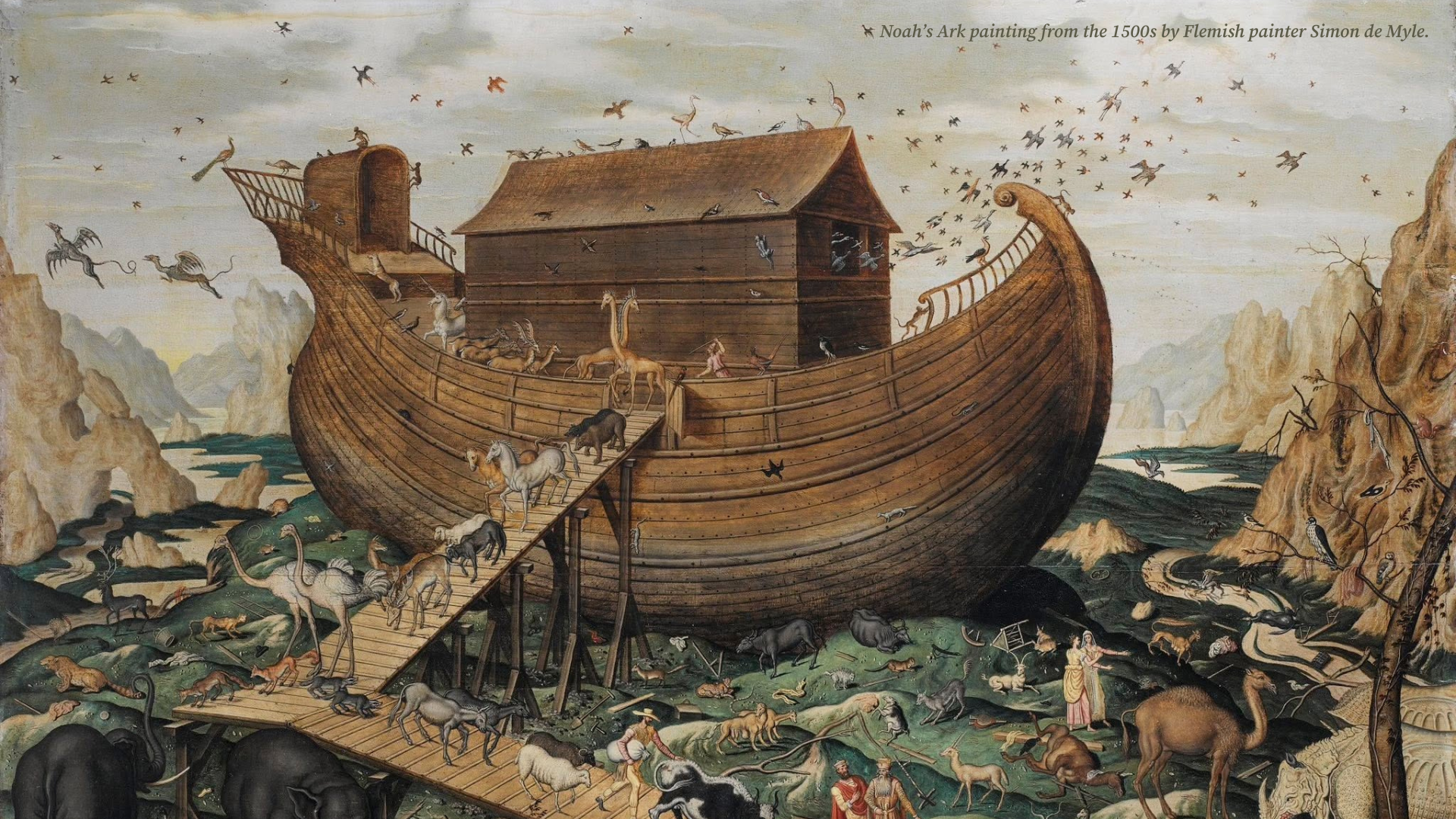
Ask anyone who grew up in church what Bible story they remember first, and a lot of them will say Noah's Ark. They can walk you through most of it: God tells Noah to build the ark, the animals come two by two, the rains fall for forty days and forty nights, and a dove finally returns with an olive leaf. We remember the ark landing somewhere, but then the story tends to trail off in our memory. So what actually happened to the ark, and where is it now?
Some might also vaguely remember it coming to rest on a snow-capped mountain called Mount Ararat. That single peak is on Sunday school walls, in kids' Bibles, and in plenty of secular reference books. But the text itself points somewhere broader, and getting it right changes how you think about every search that's ever gone looking. Before any expedition, any drone footage, any debate about a boat-shaped formation in eastern Turkey, it's worth going back to the text.
One of those searches is happening right now. A team led by Noah's Ark Scans is running the most in-depth study the site has seen, and it's funded by the public. To help fund "The Search for Noah's Ark," click here. GiveSendGo is a partner in this fundraiser. We also spoke with Andrew Jones, founder and lead researcher at Noah's Ark Scans, about their upcoming search. Watch it here.
The verse everyone's thinking of is short. In the NIV, Genesis 8:4 reads simply that the ark came to rest "on the mountains of Ararat."
Mountains. Plural. Not a single named peak, but a mountain range, or more precisely, a region. Genesis never says "Mount Ararat" the way we'd point to it on a map today. It names a place called Ararat and says the ark landed somewhere in its mountains.
That distinction matters more than it may seem, because "Ararat" in the Bible isn't describing a mountain at all. It's describing a kingdom.
In the ancient world, "Ararat" wasn't a mountain at all.It was a kingdom. And it shows up in the Old Testament as a real, named place: 2 Kings 19:37 and Isaiah 37:38 both mention the "land of Ararat" as somewhere people flee to, and Jeremiah 51:27 lists it alongside other regional kingdoms being called to war. This was a real place in the ancient world, documented well beyond the Bible, not a mythic backdrop.
It's the same point the researchers now working at the Durupinar site make about their own location. As Jones put it: "The name Ararat actually comes from this word Urartu, which was the name of an ancient kingdom that was over this whole area... their territory covered into Armenia, Iran, and of course a large part of eastern Turkey where we're at." In his words, that puts the site "in the right location. The mountains of Ararat, the mountains of Urartu, covers this area."
The single, snow-capped peak we call Mount Ararat today, 16,854 feet and Turkey's tallest mountain, wasn't identified with the biblical Ararat until centuries later, largely through medieval Christian and Armenian tradition. It became "the" mountain because it's the tallest, most visible landmark in the region the Bible names, not because Genesis singles it out by name.
There's nothing wrong with how that tradition developed. Genesis points to a region, and over the centuries people understandably fixed their attention on its most dramatic peak. The text just leaves far more room than the postcard image suggests.
One detail that rarely makes it into the debate is what the people who live near the Durupinar site have called the area for generations. Jones points to a cluster of local names that line up, in striking ways, with the flood account. There's a nearby valley whose name translates roughly to "eight," which locals tie to the eight people the Bible says were aboard the ark. There's a ridge connected to the story of the raven Noah released. And the site itself is known to many in the region by a name long associated with the ark's landing place in local tradition.
None of that is proof. Place names travel and shift, and traditions grow up around famous sites. But it's a reminder that this formation didn't become interesting in 1959 when an aerial photo made the news. For the people living in its shadow, it has carried the story for a very long time. (For the full story of the site and its discovery, see What Is the Durupinar Formation?)
There's a further wrinkle that goes beyond the text, worth noting because so many searches have focused on the famous summit. The researchers studying the Durupinar formation argue that Mount Ararat itself is the wrong place to look, on geological grounds.
Their reasoning: Mount Ararat is a stratovolcano, the kind of cone-shaped peak built up over time by repeated eruptions. Jones points to the sedimentary layers beneath it, laid down by water, and the lava beds at its base as evidence of when it formed. "All the evidence shows that this mountain was formed after the flood," he says, "which means it wasn't even around for Noah's Ark to land on."
That's his argument, not a settled scientific consensus, and geologists differ on the mountain's history. But it reframes the question in a useful way: if the biblical text points to a region rather than a peak, and the most famous peak may not have existed yet when the flood receded, then the search was never really about climbing Mount Ararat in the first place.
This is exactly why a formation roughly nineteen miles south of the traditional Mount Ararat peak, the Durupinar site, is still a fair candidate under Genesis's own wording, not a stretch from it. The text doesn't require the ark to be found on the specific mountain later tradition named. It requires the ark to be somewhere in the mountains of Ararat, a region that includes far more ground than one peak.
The Durupinar formation sits within that broader region: a boat-shaped ridge close to the length Genesis gives for the ark. Genesis 6:15 records the ark's dimensions as 300 cubits long, which the researchers at the site put at roughly 515 feet, though the exact figure depends on which ancient cubit measure is used. Either way, it's part of what's kept researchers' attention on this particular formation for over sixty years.
None of that makes it the ark. Geologists have offered natural explanations for boat-shaped ridges before, and formations like this deserve the same scrutiny any extraordinary claim does. What it does mean is that the site isn't geographically disqualified by the text the way a location outside the Ararat region entirely would be. (We weigh the strongest points on both sides in The Case For and Against the Durupinar Formation.)
There's a temptation on this topic to pick a side fast, certain it's real, or certain it's nonsense. Genesis itself doesn't force that choice. It gives a region, a set of dimensions, and a flood account that has shaped faith and imagination for thousands of years. It doesn't hand anyone GPS coordinates.
That's the posture worth taking into any conversation about a possible ark site: curious, not certain. Grounded in what the text actually claims, not what tradition has layered on top of it. An expedition that goes and looks, with radar, with core samples, with real scientists willing to publish what they find either way, is a more faithful response to that curiosity than either dismissing the question outright or declaring it settled before the data is in.
Quick Answers
A research team now has permission to core-drill the Durupinar site and pull real samples from inside the formation for the first time in decades. The drilling won't hand down a final verdict on its own, but it can move the question past sixty years of interpreting surface scans, toward physical material a laboratory can actually test. (For a closer look at that operation, see Core Drilling Begins at the Noah’s Ark Site.)
GiveSendGo is a partner in this fundraiser, not certifying what the team will find, just helping make sure the question finally gets a direct test instead of another sixty years of debate.
Follow "The Search for Noah's Ark" and help fund the dig here.
Keep Reading
Some might also vaguely remember it coming to rest on a snow-capped mountain called Mount Ararat. That single peak is on Sunday school walls, in kids' Bibles, and in plenty of secular reference books. But the text itself points somewhere broader, and getting it right changes how you think about every search that's ever gone looking. Before any expedition, any drone footage, any debate about a boat-shaped formation in eastern Turkey, it's worth going back to the text.
One of those searches is happening right now. A team led by Noah's Ark Scans is running the most in-depth study the site has seen, and it's funded by the public. To help fund "The Search for Noah's Ark," click here. GiveSendGo is a partner in this fundraiser. We also spoke with Andrew Jones, founder and lead researcher at Noah's Ark Scans, about their upcoming search. Watch it here.
What Genesis Actually Says
The verse everyone's thinking of is short. In the NIV, Genesis 8:4 reads simply that the ark came to rest "on the mountains of Ararat."
Mountains. Plural. Not a single named peak, but a mountain range, or more precisely, a region. Genesis never says "Mount Ararat" the way we'd point to it on a map today. It names a place called Ararat and says the ark landed somewhere in its mountains.
That distinction matters more than it may seem, because "Ararat" in the Bible isn't describing a mountain at all. It's describing a kingdom.
Ararat the Kingdom, Not Ararat the Peak
In the ancient world, "Ararat" wasn't a mountain at all.It was a kingdom. And it shows up in the Old Testament as a real, named place: 2 Kings 19:37 and Isaiah 37:38 both mention the "land of Ararat" as somewhere people flee to, and Jeremiah 51:27 lists it alongside other regional kingdoms being called to war. This was a real place in the ancient world, documented well beyond the Bible, not a mythic backdrop.
It's the same point the researchers now working at the Durupinar site make about their own location. As Jones put it: "The name Ararat actually comes from this word Urartu, which was the name of an ancient kingdom that was over this whole area... their territory covered into Armenia, Iran, and of course a large part of eastern Turkey where we're at." In his words, that puts the site "in the right location. The mountains of Ararat, the mountains of Urartu, covers this area."
The single, snow-capped peak we call Mount Ararat today, 16,854 feet and Turkey's tallest mountain, wasn't identified with the biblical Ararat until centuries later, largely through medieval Christian and Armenian tradition. It became "the" mountain because it's the tallest, most visible landmark in the region the Bible names, not because Genesis singles it out by name.
There's nothing wrong with how that tradition developed. Genesis points to a region, and over the centuries people understandably fixed their attention on its most dramatic peak. The text just leaves far more room than the postcard image suggests.
What the Locals Have Long Called It
One detail that rarely makes it into the debate is what the people who live near the Durupinar site have called the area for generations. Jones points to a cluster of local names that line up, in striking ways, with the flood account. There's a nearby valley whose name translates roughly to "eight," which locals tie to the eight people the Bible says were aboard the ark. There's a ridge connected to the story of the raven Noah released. And the site itself is known to many in the region by a name long associated with the ark's landing place in local tradition.
None of that is proof. Place names travel and shift, and traditions grow up around famous sites. But it's a reminder that this formation didn't become interesting in 1959 when an aerial photo made the news. For the people living in its shadow, it has carried the story for a very long time. (For the full story of the site and its discovery, see What Is the Durupinar Formation?)
Could the Ark Even Be on the Modern Peak?
There's a further wrinkle that goes beyond the text, worth noting because so many searches have focused on the famous summit. The researchers studying the Durupinar formation argue that Mount Ararat itself is the wrong place to look, on geological grounds.
Their reasoning: Mount Ararat is a stratovolcano, the kind of cone-shaped peak built up over time by repeated eruptions. Jones points to the sedimentary layers beneath it, laid down by water, and the lava beds at its base as evidence of when it formed. "All the evidence shows that this mountain was formed after the flood," he says, "which means it wasn't even around for Noah's Ark to land on."
That's his argument, not a settled scientific consensus, and geologists differ on the mountain's history. But it reframes the question in a useful way: if the biblical text points to a region rather than a peak, and the most famous peak may not have existed yet when the flood receded, then the search was never really about climbing Mount Ararat in the first place.
Why This Matters for the Durupinar Site
This is exactly why a formation roughly nineteen miles south of the traditional Mount Ararat peak, the Durupinar site, is still a fair candidate under Genesis's own wording, not a stretch from it. The text doesn't require the ark to be found on the specific mountain later tradition named. It requires the ark to be somewhere in the mountains of Ararat, a region that includes far more ground than one peak.
The Durupinar formation sits within that broader region: a boat-shaped ridge close to the length Genesis gives for the ark. Genesis 6:15 records the ark's dimensions as 300 cubits long, which the researchers at the site put at roughly 515 feet, though the exact figure depends on which ancient cubit measure is used. Either way, it's part of what's kept researchers' attention on this particular formation for over sixty years.
None of that makes it the ark. Geologists have offered natural explanations for boat-shaped ridges before, and formations like this deserve the same scrutiny any extraordinary claim does. What it does mean is that the site isn't geographically disqualified by the text the way a location outside the Ararat region entirely would be. (We weigh the strongest points on both sides in The Case For and Against the Durupinar Formation.)
The Honest Middle Ground
There's a temptation on this topic to pick a side fast, certain it's real, or certain it's nonsense. Genesis itself doesn't force that choice. It gives a region, a set of dimensions, and a flood account that has shaped faith and imagination for thousands of years. It doesn't hand anyone GPS coordinates.
That's the posture worth taking into any conversation about a possible ark site: curious, not certain. Grounded in what the text actually claims, not what tradition has layered on top of it. An expedition that goes and looks, with radar, with core samples, with real scientists willing to publish what they find either way, is a more faithful response to that curiosity than either dismissing the question outright or declaring it settled before the data is in.
Quick Answers
- Does the Bible name "Mount Ararat" as a single mountain? No. Genesis 8:4 says the ark rested on "the mountains of Ararat," a region, not one named peak.
- Is today's Mount Ararat the same place the Bible means? It's the mountain later tradition identified with that region, largely because it's the tallest and most visible peak there. Genesis itself doesn't name it specifically.
- Where is the Durupinar formation in relation to Mount Ararat? About nineteen miles south of the traditional peak, within the same historical Ararat region the Bible refers to.
- How big was Noah's Ark, according to Genesis? Genesis 6:15 gives its dimensions as 300 cubits long, 50 cubits wide, and 30 cubits high, roughly 515 by 85 by 50 feet, depending on the cubit measure used.
Follow the Search
A research team now has permission to core-drill the Durupinar site and pull real samples from inside the formation for the first time in decades. The drilling won't hand down a final verdict on its own, but it can move the question past sixty years of interpreting surface scans, toward physical material a laboratory can actually test. (For a closer look at that operation, see Core Drilling Begins at the Noah’s Ark Site.)
GiveSendGo is a partner in this fundraiser, not certifying what the team will find, just helping make sure the question finally gets a direct test instead of another sixty years of debate.
Follow "The Search for Noah's Ark" and help fund the dig here.
Keep Reading
Comments
There are no comments yet. Be the first to add a comment below!
Leave a Comment
Fields with * are requiredGiveSendGo
The place where help and hope go hand-in-hand.
