

Blog
Has Noah’s Ark Been Found? What We Know in 2026.
Posted by Alex Shipley. Interview by Elijah Snider. on Aug 22, 2026
Finding a legendary artifact looks easy in the movies. Indiana Jones needed little more than a map, a fedora, and a well-timed whip. Real life is slower: the search for Noah's Ark has run sixty years without a definitive answer, and 2026 might be the closest anyone's come.
So let's start with the honest answer: no. As of 2026, no one has confirmed the discovery of Noah's Ark, and no find has been verified by the broader scientific or archaeological community.
But this "no" actually hides a much more interesting story. There's a formation in eastern Turkey that has kept this question alive for over sixty years, and this year, a team from Noah’s Ark Scans has finally secured the permits and the technology to test what's beneath it directly, rather than just debate scans from the surface. Here's what's genuinely known, what's claimed, who disputes it, and what’s happening next.
Watch our full interview here with Andrew Jones, founder and lead researcher at Noah's Ark Scans, where we ask him more about the search. And it's being funded by everyday people who want the question answered. To help fund "The Search for Noah's Ark," click here. GiveSendGo is a partner in this fundraiser.
Nearly every serious modern claim points to one place: the Durupinar formation, a boat-shaped ridge about 18 miles south of Mount Ararat, near Turkey's border with Iran. It was first noted in 1959 by Turkish army captain Ilhan Durupinar during an aerial survey, and it's been a magnet for Ark-hunters ever since.
Its shape and its size are what keep drawing people back. From the air, it reads unmistakably like a ship's hull. And researchers measure it at roughly 515 feet long, close to the dimensions Genesis gives for the ark, 300 cubits (Genesis 6:15). It also sits within the region Genesis names as the ark's resting place, "the mountains of Ararat" (Genesis 8:4), which describes a whole mountainous region, not one single peak. We unpack the full biblical background in [Mount Ararat and Noah's Ark].
The current investigation is driven by Jones, with 2026 fieldwork directed by Professor Cenker Atila, an archaeologist at Sivas Cumhuriyet University, after their Turkish partner secured government permits. We sat down with Jones over a video call to talk more about the search. Jones is candid that he's a software developer and independent researcher, not an archaeologist himself, which is part of why the 2026 work is built around credentialed academic partners and laboratory testing.
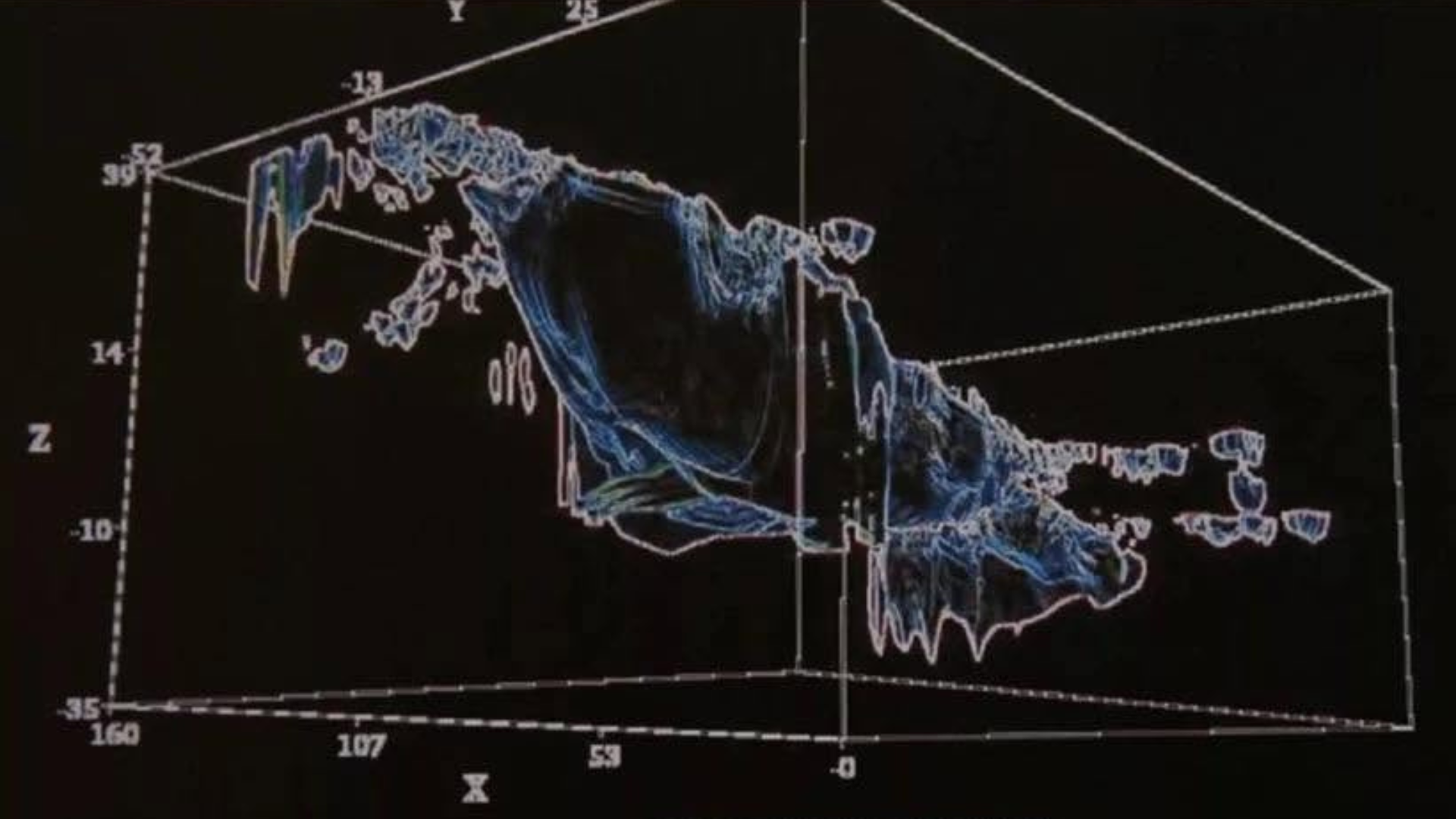
Jones and his team report several findings they consider significant. Using ground-penetrating radar, electrical resistivity, and other scans, they say they've detected angular structures and corridor-like features several meters below the surface, shapes they argue rarely occur through natural processes. Jones has said the readings are not what you'd expect from a solid block of rock or random mudflow debris, but are consistent with what a constructed vessel might leave behind. The team also reports that soil samples taken from inside the boat-shaped area showed higher organic content than the surrounding ground.
What the team has so far are readings and samples that point somewhere promising, and they're the first to say those readings need to be confirmed with physical material. No wood, worked timber, or clearly man-made object has been recovered and verified yet. That's exactly what the 2026 core drilling is meant to change: pulling real material from deep inside the formation that outside laboratories can test directly. "I would love to find layers of either petrified wood or something that's been left there," Jones said.
Secular scientists disagreeing with a Noah's Ark claim is no surprise. What's more striking is that some of the strongest pushback comes from fellow Christians, people who would love to see the ark found, but still don't believe this site is it.
The most notable is Dr. Andrew Snelling, a geologist with Answers in Genesis. Snelling is a young-earth creationist who fully believes the flood happened and would love to see the ark recovered, but has argued for decades that Durupinar is just a natural rock formation, not the ark. His view is that the site's features are geological, and that we shouldn't expect a wooden vessel to have survived and remained findable after thousands of years.
He's not alone among believers. Evangelical researchers Bill Crouse and Gordon Franz have co-authored detailed critiques also concluding the Durupinar claims don't hold up.
Secular scientists have been more pointed still. The most-cited rebuttal is a 1996 peer-reviewed paper by geologist Lorence Collins of California State University Northridge, which concluded the formation is a natural syncline of sedimentary rock, with the "man-made" features explained as ordinary mineral concentrations. Notably, Collins's co-author was David Fasold, the American researcher who in the 1980s first helped popularize Durupinar as a possible ark, and who by 1996 had published against it.
The mainstream scientific and archaeological consensus today is that the Durupinar formation is a natural landform. We lay out the strongest points on both sides in [The Case For and Against the Durupinar Formation].
Jones doesn't dispute that the debate exists. "You're gonna find archaeologists, they always debate about everything," he says, acknowledging that archaeology deals in "different degrees of certainty" rather than absolute proof. He says he never expected universal agreement, and that the team's job is to gather data and "let everyone else decide."
On the syncline paper specifically, his response is to point to a different geologist. Jones says he's spent years at the site with Dr. Salih Bayraktutan, a Turkish geologist who has studied the formation since the mid-1980s, and who argues it isn't a folded rock formation at all — that apart from a few boulders, the structure is largely earthen, without the exposed sedimentary rock layers a true syncline would show. Jones's argument is essentially one of proximity: the 1996 paper's co-author, he notes, never visited the site, while Bayraktutan has walked it for decades. Skeptics counter that firsthand familiarity doesn't override peer-reviewed analysis, leaving the debate deadlocked.
The team's most recent survey speaks to that same argument. In an August 2026 press release, Noah's Ark Scans said it had deployed a specialized deep-ground radar across the formation and could not identify a clear bedrock boundary beneath it — a result the team argues is hard to reconcile with the idea that the site is simply solid natural rock. As even their own statement is careful to note, that isn't proof on its own: the absence of a boundary in the data processed so far doesn't confirm bedrock is absent, and radar anomalies alone don't establish an archaeological origin. But it's precisely these conflicting interpretations the upcoming core drilling is designed to test directly.
Because for all sixty years of argument, no one has ever done the one thing that could actually move it forward: drill into the formation with modern tools and pull real samples from deep inside for independent laboratory analysis. Every round of the debate so far has been fought over surface features, metal-detector readings, and radar interpretation — data open to being read both ways.
It's worth being honest about what drilling can and can't do. It may not deliver a single, tidy verdict that ends the argument forever. But it can replace interpretation of surface scans with physical material a lab can actually date and identify, which is a real step no one has taken. The 2026 investigation, a multi-phase survey capped by minimally invasive core drilling, is designed to take it. And the team has committed to sharing what it finds regardless of the outcome. "We're gonna publish and share no matter what the data shows," as Jones puts it, which is the standard any honest search should be held to.
You don't have to pick a side today to find that worth watching. It might confirm what believers have hoped for generations. It might confirm the skeptics. Both are real possibilities, and both are worth knowing honestly. For Jones, the stakes reach past this one site. "If this story's true," he says, "then what else in the Bible is true?"
The team has government permits in hand and plans to carry out the core drilling and remaining survey phases this year, with samples going to university laboratories for independent testing. For a full breakdown of the expedition, the methods, and the people leading it, see [Inside the 2026 Search at Durupinar]. For the images that have fueled sixty years of debate, see [Photos from the Noah's Ark Site].
The 2026 search is run by Noah's Ark Scans and funded by the public through a fundraiser hosted on GiveSendGo. GiveSendGo is a partner in this fundraiser, not to declare what the team will find, but to help make sure a decades-old question finally gets a rigorous, testable answer.
Follow "The Search for Noah's Ark" and help fund the dig here.
So let's start with the honest answer: no. As of 2026, no one has confirmed the discovery of Noah's Ark, and no find has been verified by the broader scientific or archaeological community.
But this "no" actually hides a much more interesting story. There's a formation in eastern Turkey that has kept this question alive for over sixty years, and this year, a team from Noah’s Ark Scans has finally secured the permits and the technology to test what's beneath it directly, rather than just debate scans from the surface. Here's what's genuinely known, what's claimed, who disputes it, and what’s happening next.
Watch our full interview here with Andrew Jones, founder and lead researcher at Noah's Ark Scans, where we ask him more about the search. And it's being funded by everyday people who want the question answered. To help fund "The Search for Noah's Ark," click here. GiveSendGo is a partner in this fundraiser.
Where the Search Is Focused: the Durupinar Formation
Nearly every serious modern claim points to one place: the Durupinar formation, a boat-shaped ridge about 18 miles south of Mount Ararat, near Turkey's border with Iran. It was first noted in 1959 by Turkish army captain Ilhan Durupinar during an aerial survey, and it's been a magnet for Ark-hunters ever since.
Its shape and its size are what keep drawing people back. From the air, it reads unmistakably like a ship's hull. And researchers measure it at roughly 515 feet long, close to the dimensions Genesis gives for the ark, 300 cubits (Genesis 6:15). It also sits within the region Genesis names as the ark's resting place, "the mountains of Ararat" (Genesis 8:4), which describes a whole mountainous region, not one single peak. We unpack the full biblical background in [Mount Ararat and Noah's Ark].
What the Researchers Say They've Found
The current investigation is driven by Jones, with 2026 fieldwork directed by Professor Cenker Atila, an archaeologist at Sivas Cumhuriyet University, after their Turkish partner secured government permits. We sat down with Jones over a video call to talk more about the search. Jones is candid that he's a software developer and independent researcher, not an archaeologist himself, which is part of why the 2026 work is built around credentialed academic partners and laboratory testing.
Jones and his team report several findings they consider significant. Using ground-penetrating radar, electrical resistivity, and other scans, they say they've detected angular structures and corridor-like features several meters below the surface, shapes they argue rarely occur through natural processes. Jones has said the readings are not what you'd expect from a solid block of rock or random mudflow debris, but are consistent with what a constructed vessel might leave behind. The team also reports that soil samples taken from inside the boat-shaped area showed higher organic content than the surrounding ground.
What the team has so far are readings and samples that point somewhere promising, and they're the first to say those readings need to be confirmed with physical material. No wood, worked timber, or clearly man-made object has been recovered and verified yet. That's exactly what the 2026 core drilling is meant to change: pulling real material from deep inside the formation that outside laboratories can test directly. "I would love to find layers of either petrified wood or something that's been left there," Jones said.
Who Disputes It, and Why
Secular scientists disagreeing with a Noah's Ark claim is no surprise. What's more striking is that some of the strongest pushback comes from fellow Christians, people who would love to see the ark found, but still don't believe this site is it.
The most notable is Dr. Andrew Snelling, a geologist with Answers in Genesis. Snelling is a young-earth creationist who fully believes the flood happened and would love to see the ark recovered, but has argued for decades that Durupinar is just a natural rock formation, not the ark. His view is that the site's features are geological, and that we shouldn't expect a wooden vessel to have survived and remained findable after thousands of years.
He's not alone among believers. Evangelical researchers Bill Crouse and Gordon Franz have co-authored detailed critiques also concluding the Durupinar claims don't hold up.
Secular scientists have been more pointed still. The most-cited rebuttal is a 1996 peer-reviewed paper by geologist Lorence Collins of California State University Northridge, which concluded the formation is a natural syncline of sedimentary rock, with the "man-made" features explained as ordinary mineral concentrations. Notably, Collins's co-author was David Fasold, the American researcher who in the 1980s first helped popularize Durupinar as a possible ark, and who by 1996 had published against it.
The mainstream scientific and archaeological consensus today is that the Durupinar formation is a natural landform. We lay out the strongest points on both sides in [The Case For and Against the Durupinar Formation].
How the Researchers Answer the Skeptics
Jones doesn't dispute that the debate exists. "You're gonna find archaeologists, they always debate about everything," he says, acknowledging that archaeology deals in "different degrees of certainty" rather than absolute proof. He says he never expected universal agreement, and that the team's job is to gather data and "let everyone else decide."
On the syncline paper specifically, his response is to point to a different geologist. Jones says he's spent years at the site with Dr. Salih Bayraktutan, a Turkish geologist who has studied the formation since the mid-1980s, and who argues it isn't a folded rock formation at all — that apart from a few boulders, the structure is largely earthen, without the exposed sedimentary rock layers a true syncline would show. Jones's argument is essentially one of proximity: the 1996 paper's co-author, he notes, never visited the site, while Bayraktutan has walked it for decades. Skeptics counter that firsthand familiarity doesn't override peer-reviewed analysis, leaving the debate deadlocked.
The team's most recent survey speaks to that same argument. In an August 2026 press release, Noah's Ark Scans said it had deployed a specialized deep-ground radar across the formation and could not identify a clear bedrock boundary beneath it — a result the team argues is hard to reconcile with the idea that the site is simply solid natural rock. As even their own statement is careful to note, that isn't proof on its own: the absence of a boundary in the data processed so far doesn't confirm bedrock is absent, and radar anomalies alone don't establish an archaeological origin. But it's precisely these conflicting interpretations the upcoming core drilling is designed to test directly.
So Why Is This Still Worth Following?
Because for all sixty years of argument, no one has ever done the one thing that could actually move it forward: drill into the formation with modern tools and pull real samples from deep inside for independent laboratory analysis. Every round of the debate so far has been fought over surface features, metal-detector readings, and radar interpretation — data open to being read both ways.
It's worth being honest about what drilling can and can't do. It may not deliver a single, tidy verdict that ends the argument forever. But it can replace interpretation of surface scans with physical material a lab can actually date and identify, which is a real step no one has taken. The 2026 investigation, a multi-phase survey capped by minimally invasive core drilling, is designed to take it. And the team has committed to sharing what it finds regardless of the outcome. "We're gonna publish and share no matter what the data shows," as Jones puts it, which is the standard any honest search should be held to.
You don't have to pick a side today to find that worth watching. It might confirm what believers have hoped for generations. It might confirm the skeptics. Both are real possibilities, and both are worth knowing honestly. For Jones, the stakes reach past this one site. "If this story's true," he says, "then what else in the Bible is true?"
What's Next in 2026
The team has government permits in hand and plans to carry out the core drilling and remaining survey phases this year, with samples going to university laboratories for independent testing. For a full breakdown of the expedition, the methods, and the people leading it, see [Inside the 2026 Search at Durupinar]. For the images that have fueled sixty years of debate, see [Photos from the Noah's Ark Site].
The 2026 search is run by Noah's Ark Scans and funded by the public through a fundraiser hosted on GiveSendGo. GiveSendGo is a partner in this fundraiser, not to declare what the team will find, but to help make sure a decades-old question finally gets a rigorous, testable answer.
Follow "The Search for Noah's Ark" and help fund the dig here.
Comments
There are no comments yet. Be the first to add a comment below!
Leave a Comment
Fields with * are requiredGiveSendGo
The place where help and hope go hand-in-hand.
