
$25 Trains a Teacher. That Teacher Reaches 1,200 C

$25 Trains a Teacher. That Teacher Reaches 1,200 C
Fundraiser created byDennis Magige
$25 Trains a Teacher. That Teacher Reaches 1,200 C
Recent Donations
Updates
Prayer Requests
Click the Pray button to let the fundraiser owner know you are praying for them.
Fundraisers Near Me
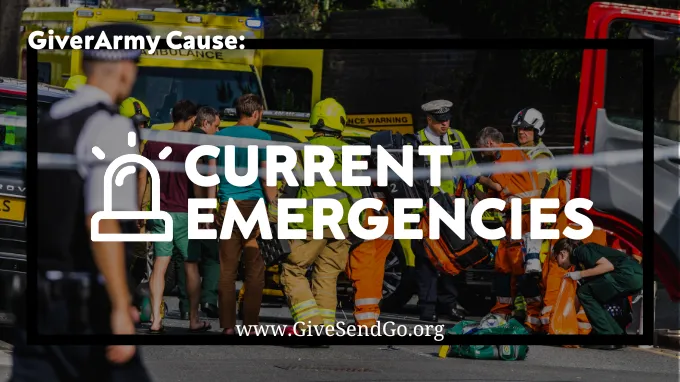
GiverArmy Cause CURRENT EMERGENCIES
Our Current Emergencies cause is a fund uniquely set up to provide grants to qualifying campaigns on GiveSendGo.com.Grants Distribution is for:Pr...
Loading...

GiverArmy Cause ANIMAL RESCUE & CARE
Our Animal Rescue & Care cause is a fund uniquely set up to provide grants to qualifying campaigns on GiveSendGo.com.Grants Distribution:Prom...
Loading...

GiverArmy Cause ARTS & EDUCATION
Our Arts & Education cause is a fund uniquely set up to provide grants to qualifying campaigns on GiveSendGo.com.Grants Distribution:Supporting ar...
Loading...
GiverArmy Cause FAITH BASED
Our Faith-Based cause is a fund uniquely set up to provide grants to qualifying campaigns on GiveSendGo.com.Grants Distribution:Funding mission-o...
Loading...

GiverArmy Cause RESCUE & REHABILITATION
Our Rescue & Rehabilitation Cause is a fund uniquely set up to provide grants to qualifying campaigns on GiveSendGo.com.Grants Distribution:S...
Loading...

GiverArmy Cause EARTH CARE
Our Earth Care cause is a fund uniquely set up to provide grants to qualifying campaigns on GiveSendGo.com.Grants Distribution are for:Funding communi...
Loading...

GiverArmy Cause ESSENTIALS FOR LIFE
Our Essentials for Life Cause is a fund set up to provide grants to qualifying campaigns on GiveSendGo.com. Grants Distribution are designated to...
Loading...

GiverArmy Cause CRISIS RESPONSE
Our Crisis Response Cause is a fund uniquely set up to mobilize resources for need, creating direct Kingdom Impact, providing grants to qualifying cam...
Loading...

GiverArmy Cause JUSTICE FOR ALL
Our Justice for All Cause is uniquely set up fund that provide grants to qualifying campaigns on GiveSendGo.com.Grants Distributions are made to:Ensur...
Loading...

GiverArmy Cause MEDICAL RELIEF
Our Medical Relief Cause is our charitable fund set up to provide grants to qualifying campaigns on GiveSendGo.com.Grants Distribution from this...
Loading...
GiveSendGo
The place where help and hope go hand-in-hand.
