
Blog
Is Daniel and the Fiery Furnace OK for Kids? An Honest Parent's Guide
Posted by Alex Shipley. Interview by Elijah Snider. on Aug 11, 2026
As a parent, you've probably been waiting for a biblical film worth watching as a whole family. One you don’t have to brace for and leads you closer to Christ, not further away. You've probably come to this page hoping Daniel and the Fiery Furnace is just that movie.
This guide covers what the movie's about, its rating, and what your family should know going in, so you can feel confident buying tickets.
And through the movie's fundraiser on GiveSendGo, you can help send someone who couldn't otherwise afford to see Daniel too. Give today to help send someone.
Daniel and the Fiery Furnace brings one of the Bible's most well-known stories to the screen: three men who refuse to bow to a king's golden statue and are sentenced to death in a blazing furnace for it.
Mena Massoud (Disney's live-action Aladdin) stars as Daniel, and Elijah Alexander (The Chosen) plays King Nebuchadnezzar. The film was shot in India, using real palaces and converted military compounds to bring ancient Babylon to life, and comes from brothers Daniel and Matthew Kooman, twenty years into making films together.
This is a story about faith and conviction that doesn't bend under pressure. Shadrach, Meshach, and Abednego face a real death sentence for staying faithful to God. Their answer to the king is the emotional center of the whole film: He's able to save them, but even if He doesn't, they still won't bow. For families, it's a rare chance to talk together about what it costs to stay faithful when it isn't easy, and what it looks like when God shows up in the middle of the hard thing instead of removing it altogether.
The Kooman brothers have also said a Hebrew scholar who reviewed the script called it the most accurate faith film he'd evaluated — a real point of trust for parents who already know this story well themselves and want to see it told right.
Not yet. As of this writing, Daniel and the Fiery Furnace hasn't received an official rating. The filmmakers themselves expect it will land somewhere around PG-13 once that process is finished. We'll update this page the moment it is.
We asked the Kooman brothers directly what parents should know. "There's no language or sexual content or any of those elements," they said. The intensity comes from real peril, not content you'd usually need to screen for.
On age, they didn't give a hard cutoff so much as a range: "I think 10 plus, 9 plus, something in there is a really accurate guide," as they put it.
Here's how that breaks down further:
When we asked the Kooman brothers directly what parents should know, they named one scene specifically. Beyond that, the story itself carries two more real sources of intensity worth knowing about before you go:
An army entering Jerusalem. Earlier in the film, an army takes the city and swords are drawn. In the filmmakers' own words, this alludes to the trauma of that invasion without showing the full violence Scripture describes. It's brief, they've said, but present, and worth knowing about.
King Nebuchadnezzar. He isn't confined to one scene. He's a presence through much of the film, a furious, powerful king who demands to be worshipped and isn't used to being told no. His anger at Shadrach, Meshach, and Abednego's refusal, and the real threat he represents throughout, may be intimidating for younger kids well before the furnace itself arrives.
The furnace. The film's central scene is exactly what the title promises: three men sentenced to death by fire for refusing to worship a golden statue. It's a moment of genuine peril, what looks like hopelessness before it becomes a moment of deliverance. In Scripture, the soldiers who threw Daniel's friends in the fire don't survive the heat of the furnace themselves, though it's unlikely the film will show this in any graphic detail. Younger kids may feel the tension in that buildup, and stress during the scene itself, even knowing how the story ends.
None of these are there purely for shock value. All three are faithful to the text, and part of why this story has mattered to people for thousands of years: real faith, held under a real threat. That threat still feels real to a kid watching it, though, which is exactly why it's worth knowing ahead of time, not discovering mid-movie.
The best way to experience this story as a family is to read Daniel together before you go, then talk through it again once you've seen it come to life on screen. What surprised you. What the movie changed or added. What stood out to each of you.
One worth asking directly, especially with an older kid or teen: if you'd been standing where Shadrach, Meshach, and Abednego were, would you have made the same choice?
[Read the full story of Shadrach, Meshach, and Abednego here], including why Daniel himself wasn't in the furnace with his three friends, and who the mysterious fourth figure in the fire was.
However you decide to see this one, you'll be walking in with your eyes open, which is really all any of this is meant to give you.
Daniel and the Fiery Furnace opens in theaters September 18, 2026. Through their fundraiser on GiveSendGo, you can help send someone who couldn't otherwise afford to see Daniel too.
Give to send someone today.
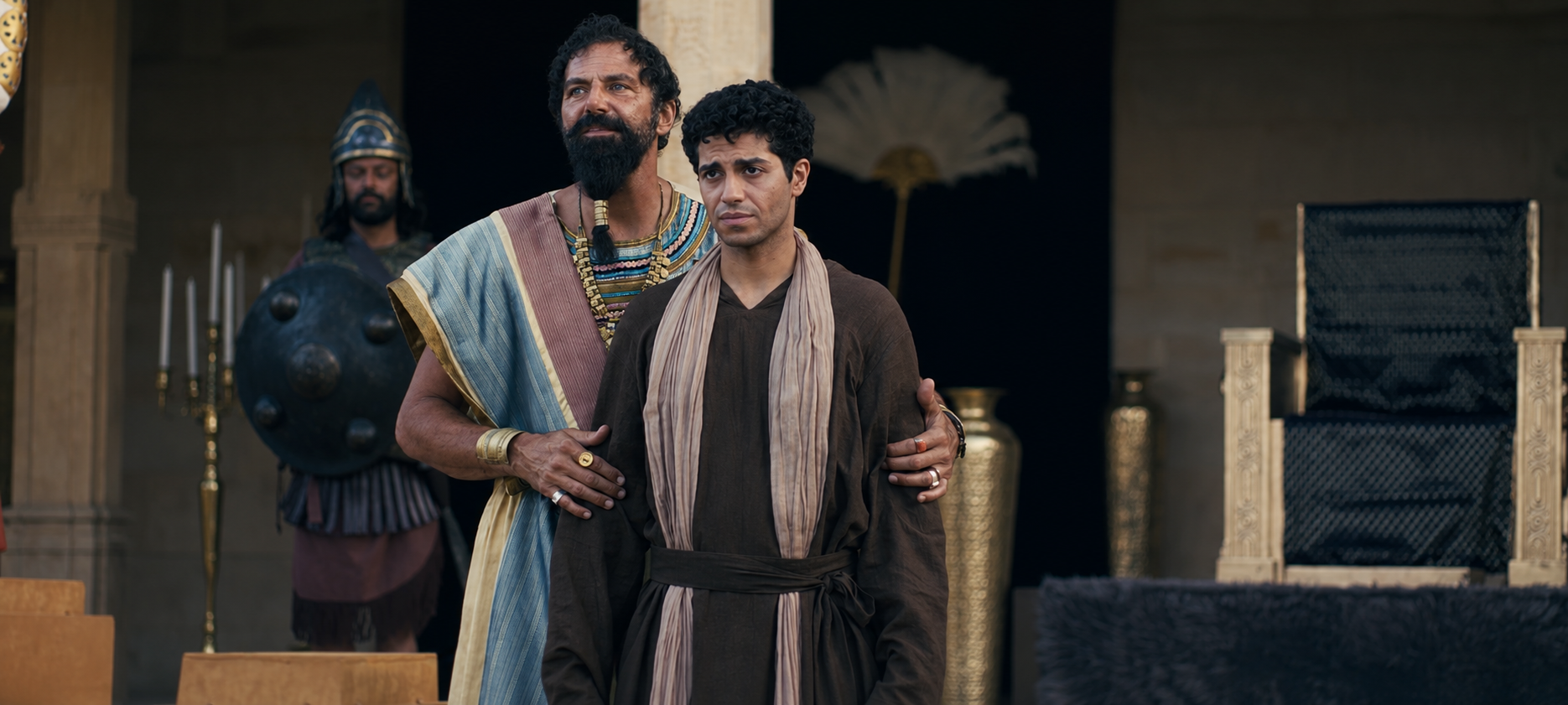
Header image from Daniel and the Fiery Furnace.
This guide covers what the movie's about, its rating, and what your family should know going in, so you can feel confident buying tickets.
And through the movie's fundraiser on GiveSendGo, you can help send someone who couldn't otherwise afford to see Daniel too. Give today to help send someone.
What Is Daniel and the Fiery Furnace About?
Daniel and the Fiery Furnace brings one of the Bible's most well-known stories to the screen: three men who refuse to bow to a king's golden statue and are sentenced to death in a blazing furnace for it.
Mena Massoud (Disney's live-action Aladdin) stars as Daniel, and Elijah Alexander (The Chosen) plays King Nebuchadnezzar. The film was shot in India, using real palaces and converted military compounds to bring ancient Babylon to life, and comes from brothers Daniel and Matthew Kooman, twenty years into making films together.
Content & Themes
This is a story about faith and conviction that doesn't bend under pressure. Shadrach, Meshach, and Abednego face a real death sentence for staying faithful to God. Their answer to the king is the emotional center of the whole film: He's able to save them, but even if He doesn't, they still won't bow. For families, it's a rare chance to talk together about what it costs to stay faithful when it isn't easy, and what it looks like when God shows up in the middle of the hard thing instead of removing it altogether.
The Kooman brothers have also said a Hebrew scholar who reviewed the script called it the most accurate faith film he'd evaluated — a real point of trust for parents who already know this story well themselves and want to see it told right.
Is There an Official Rating Yet?
Not yet. As of this writing, Daniel and the Fiery Furnace hasn't received an official rating. The filmmakers themselves expect it will land somewhere around PG-13 once that process is finished. We'll update this page the moment it is.
We asked the Kooman brothers directly what parents should know. "There's no language or sexual content or any of those elements," they said. The intensity comes from real peril, not content you'd usually need to screen for.
On age, they didn't give a hard cutoff so much as a range: "I think 10 plus, 9 plus, something in there is a really accurate guide," as they put it.
Here's how that breaks down further:
- 8 and under: This is the age where real caution matters most. A brief battle scene, King Nebuchadnezzar's rage, and the furnace may be frightening or overwhelming, even with a good outcome. If you bring a child this age, sit with them, and talk through the story first so they know how it ends before it's on screen.
- 9–12: This lines up with the filmmakers' own guidance, and it's where most kids can sit with real tension and a real resolution, especially with a parent close by. This is where the story tends to actually land instead of just entertain, though you know your own child's sensitivity to peril better than any guide can.
- 13 and up: There's nothing here that should give you pause. Many teens already half-know this story from church and are curious to see it done well on screen. Shadrach, Meshach, and Abednego were likely teenagers or young adults themselves when they faced all of this. As the filmmakers put it: "Would a 16-year-old be able to withstand what these guys faced?" It's worth talking about together afterward: what can we learn from their example? How do you think they must have felt, having their faith tested even in the face of life and death?
What Parents Should Know
When we asked the Kooman brothers directly what parents should know, they named one scene specifically. Beyond that, the story itself carries two more real sources of intensity worth knowing about before you go:
An army entering Jerusalem. Earlier in the film, an army takes the city and swords are drawn. In the filmmakers' own words, this alludes to the trauma of that invasion without showing the full violence Scripture describes. It's brief, they've said, but present, and worth knowing about.
King Nebuchadnezzar. He isn't confined to one scene. He's a presence through much of the film, a furious, powerful king who demands to be worshipped and isn't used to being told no. His anger at Shadrach, Meshach, and Abednego's refusal, and the real threat he represents throughout, may be intimidating for younger kids well before the furnace itself arrives.
The furnace. The film's central scene is exactly what the title promises: three men sentenced to death by fire for refusing to worship a golden statue. It's a moment of genuine peril, what looks like hopelessness before it becomes a moment of deliverance. In Scripture, the soldiers who threw Daniel's friends in the fire don't survive the heat of the furnace themselves, though it's unlikely the film will show this in any graphic detail. Younger kids may feel the tension in that buildup, and stress during the scene itself, even knowing how the story ends.
None of these are there purely for shock value. All three are faithful to the text, and part of why this story has mattered to people for thousands of years: real faith, held under a real threat. That threat still feels real to a kid watching it, though, which is exactly why it's worth knowing ahead of time, not discovering mid-movie.
How to Prepare or Discuss After
The best way to experience this story as a family is to read Daniel together before you go, then talk through it again once you've seen it come to life on screen. What surprised you. What the movie changed or added. What stood out to each of you.
One worth asking directly, especially with an older kid or teen: if you'd been standing where Shadrach, Meshach, and Abednego were, would you have made the same choice?
[Read the full story of Shadrach, Meshach, and Abednego here], including why Daniel himself wasn't in the furnace with his three friends, and who the mysterious fourth figure in the fire was.
However you decide to see this one, you'll be walking in with your eyes open, which is really all any of this is meant to give you.
Daniel and the Fiery Furnace opens in theaters September 18, 2026. Through their fundraiser on GiveSendGo, you can help send someone who couldn't otherwise afford to see Daniel too.
Give to send someone today.
Header image from Daniel and the Fiery Furnace.
Comments
There are no comments yet. Be the first to add a comment below!
Leave a Comment
Fields with * are requiredGiveSendGo
The place where help and hope go hand-in-hand.
